
There are few festivals in India that are so eagerly awaited as Dussehra. This holiday is associated with the theme of victory, the victory of good over evil, which can manifest itself in various forms and is celebrated in many ways. While people are getting ready for the Dussehra 2026 festivities, let’s take a look at the diverse and vibrant traditions of Dussehra in different states and explain why it is so significant.
Everything You Need to Know about Dussehra
Dussehra is a holiday that is celebrated at the end of the Navratri festival. It is a day of joy and gratitude because it symbolises the victory of Lord Rama over the demon Ravana and the victory of Goddess Durga over Mahishasura. Depending on the tradition, it may also be called Dasara, Vijayadashami, or simply Dussehra. When learning about Vijayadashami, it is important to remember that in different parts of the country, there are local traditions associated with it. In some places, people burn the effigy of Ravana, and in others, they carry the idol of Goddess Durga in a procession.
Apart from these two major festivals, Dussehra is also associated with the royal traditions of Mysore, the start of a new academic year, and the opening of new businesses. In addition, in certain regions, people also honour the beginning of a new career and the study of new skills.
Dussehra 2026 Dates
Because Dussehra follows the lunar calendar, its date may change each year. In 2026, people will celebrate Dussehra on Tuesday, October 20. Traditionally, Vijayadashami falls on the tenth day of the bright half of Ashwin. If you are searching for the Dussehra 2026 date or time, remember that the most auspicious day may vary by region.
Dussehra in Karnataka
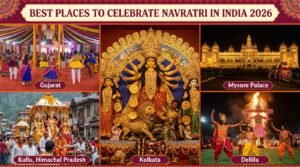
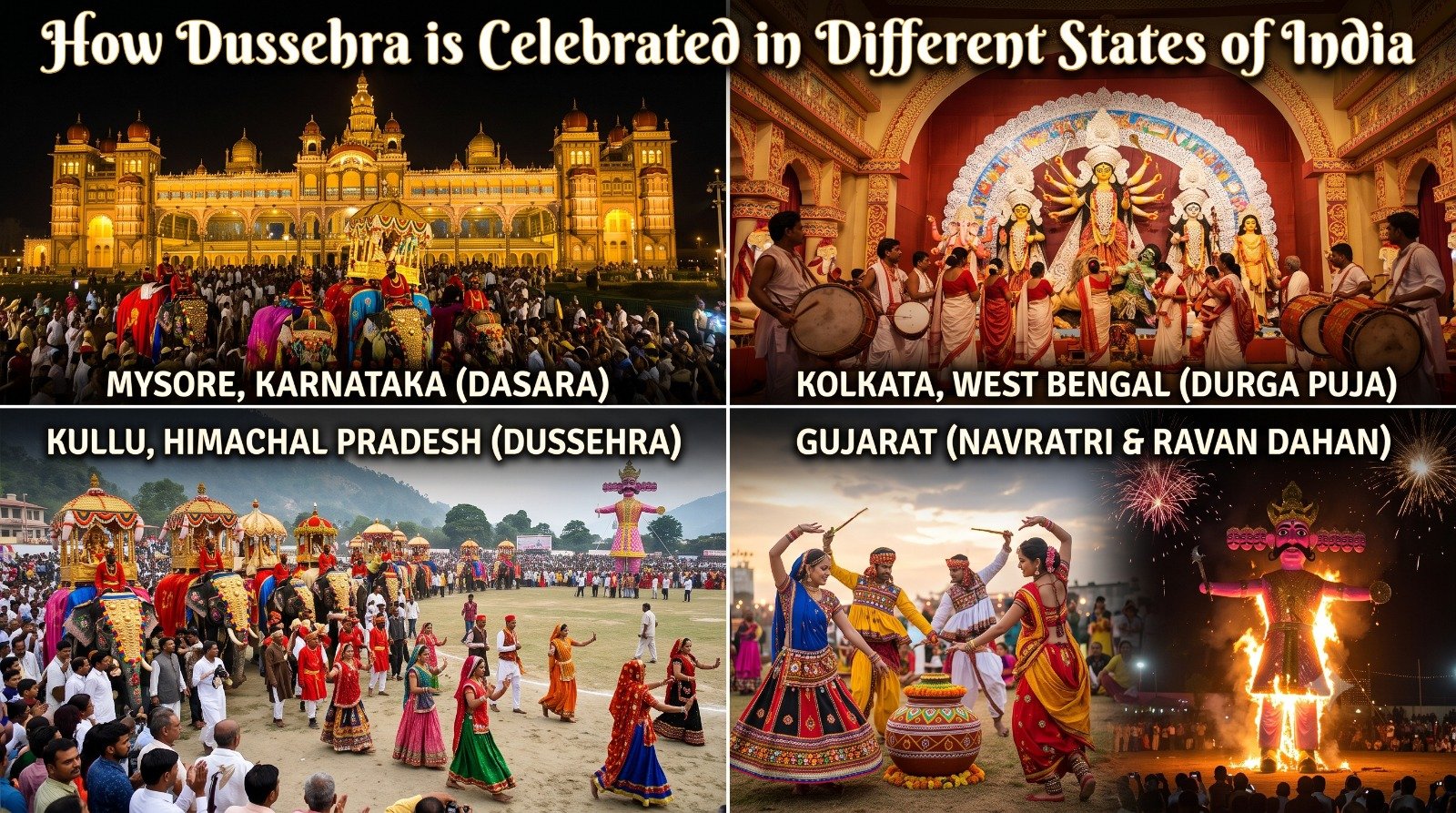
Dasara in Karnataka is associated with the grandiose Mysuru festival, which is distinguished by its royal flavour. In Mysuru, the festival is called Mysuru Dasara and involves thousands of people. The entire city turns into a festive square with its beautiful palaces, fairs, and processions. The Mysore Palace, in particular, is decorated for the festival with thousands of lights.
At the end of Dasara, the city’s residents and visitors gather for the traditional Jamboo Savari procession. During the event, musicians, folk artists, and dancers follow an elephant carrying the idol of Goddess Chamundeshwari. Thousands of people attend the Mysore Dasara festival, making it one of India’s most spectacular celebrations.
Dussehra at West Bengal
In West Bengal, Dussehra is celebrated with a religious festival devoted to Goddess Durga. In fact, it is not only the victory of Goddess Durga over the demon Mahishasura that is celebrated, but also her ten-day journey to the capital. On Dussehra Day, the idol of the goddess is taken out of the temporary temple built during the festival and immersed in flowing water in a solemn ceremony known as Sindoor Khela.
For the locals, this holiday is one of the most prominent and memorable days of the year. When studying for West Bengal Dussehra, it is important to note not only the religiousness and significance of the festival but also its spectacular fireworks, music, dance, and folk performances.
Dussehra in Delhi and North India
In Delhi, Uttar Pradesh, Haryana, Punjab, and other northern states, Dussehra is celebrated with grandiose Ramlila festivities. This holiday’s highlight is the performance of Ramlila, which narrates the story of Lord Rama and the ten-headed demon king Ravana. On the tenth day of the festival, colossal effigies of Ravana, Kumbhakarna, and Meghnad are set on fire. Fireworks and cultural festivals usually accompany this solemn and solemn event.
When looking for information about Dussehra in the north of the country, one should certainly focus on the study of Ramlila, which is a key element of the festival. It is during the performances of Ramlila that the locals celebrate the victory of good over evil and reinforce the moral values and principles of the Hindu faith.
Dussehra Celebration in Himachal Pradesh
Kullu Dussehra is famous in the Himalayas as one of the most spectacular holidays. Unlike other regions, in Kullu, Dussehra is not celebrated on the tenth day after Navratri but begins on this day and lasts for several days. On the day of Vijayadashami, the festival’s traditional procession begins, during which the idol of Lord Raghunath is taken out of the temple and brought back in a ceremony called Mahamangala. In addition, all the deities from the surrounding villages are also brought to the festival grounds in another procession.
It is noteworthy that Kullu Dussehra is also known as the festival of gods, where people honour the gods and goddesses, dance, and sing. Local women also present guests with folk dances and handicrafts. Dussehra in Kullu is attended by thousands of people throughout the region and is one of the most popular mountain festivals in the country.
Dussehra in Maharashtra
In Maharashtra, Dussehra is a holiday devoted to the worship of Lord Rama, Goddess Durga, and the celebration of the well-being of society. On this day, locals observe cultural events and the ritual distribution of Apta leaves, which are considered a sign of wealth and prosperity. People also visit temples and meet their loved ones.
It is traditional for the locals to mark the beginning of the new business year, as well as the purchase of precious objects, real estate, and other important events for the festival day. Apart from that, the inhabitants of Maharashtra can be seen worshipping various weapons, agricultural tools, vehicles, and books. This is because everything used in work is considered to be a sign of the gods.
Dussehra in Andhra Pradesh and Telangana
In Andhra Pradesh and Telangana, Dussehra is celebrated as the festival of Goddess Durga. It is customary to hold special festivals dedicated to Durga in these states, which are called Bathukamma. This holiday is associated with the worship of goddesses, the power of women, and the beauty of nature.
During the nine-day Navratri festival that precedes Dussehra, women create exquisite compositions of flowers and fruits, which are then displayed during special festivals. This day is also a day of collective celebration, especially for women. On the day of Dussehra, special pujas are held in the temples, and the locals honor all the gods and goddesses.
Dussehra in Tamil Nadu
In Tamil Nadu, Dussehra is associated with the celebration of the victory of knowledge and learning. The last day of the nine-day Navratri is called Golu, which implies the display of figurines of Gods and Goddesses. Children are also encouraged to start their studies on this day, as it is deemed auspicious for the beginning of the educational year.
Locals usually hold an Ayudha Puja, which implies the worship of books, musical instruments, and tools before using them, while children also attend Vidyarambham, where they learn to read and write. For anyone who wants to find out about the traditions of Dussehra in Tamil Nadu, it is important to note that this holiday is not only a day of warfare but also a day of learning and intellectual development.
Dussehra Celebration Kerala
In Kerala, Vijayadashami is a day of education and self-development since it is traditionally associated with the worship of books. On this day, people also worship musical instruments, and local students begin their studies on this day. The main idea of Vijayadashami in Kerala is to honor the goddess of wisdom Saraswati.
As in other parts of the country, the locals observe this day by holding a vast array of local fairs, folk performances, and festivals. However, for the residents of Kerala, the highlight of the holiday is the Vidyarambham, which implies the initiation of children into the world of education. In addition, many temples and families hold a Saraswati Puja, which is a prayer service in honor of Goddess Saraswati.
Dussehra at Odisha
In Odisha, Dussehra is a day of victory, which is why it is celebrated with a variety of festivals, the main one of which is the Durga Puja. On this day, people visit the temples, where they are offered to see the most magnificent idols of Goddess Durga, which are decorated with precious stones and other details. Locals also attend the pujas and fairs held in memory of the goddess.
In Odisha, Dussehra is celebrated with songs and festivals in honor of Goddess Durga. In addition, the locals observe the traditional Durga idol procession, which marks the end of the Durga Puja. The people of Odisha also believe in the importance of their cultural traditions and the preservation of their identity. Thus, the holiday is considered a day of joy and reflection.
Dussehra Celebration in Chhattisgarh
The unique Dussehra festival, which is celebrated in Chhattisgarh, is known as the Bastar Dussehra. It is a tribal holiday that involves the participation of people from various localities and tribes. Unlike other types of Dussehra, Bastar Dussehra is not related to the story of Lord Rama and Ravana, but rather commemorates Vijayadashami as the day when the goddess Danteshwari appeared from the earth.
This holiday is also associated with a large parade of chariots decorated with flowers and local tribal rituals. In addition, people who live in the Bastar region gather for this festival, where songs, dances, and games are organised for all ages. Therefore, learning about Dussehra traditions in Chhattisgarh also means exploring the local culture and tribal traditions of this region.
Common Traditions and Interesting Facts
Despite the differences between the Dussehra festivals in different parts of the country, there are several traditions that are common to almost all of them. First of all, all representatives of the festival tradition honour either Lord Rama, Goddess Durga, or other gods and goddesses.
In addition, Dussehra is traditionally associated with Ramlila, which is performed in many places in northern India. The effigy of Ravana is burnt in many places on the day of Vijayadashami.
Besides, the immersion of Durga idols, the worship of books, and other objects used in everyday life, family celebrations, feasts, and the start of new ventures are also common to almost all traditions of the festival. Moreover, for many locals, Dussehra is also a day of reflection and an attempt to instill important values and beliefs in children.
Why Celebrate Dussehra?
All the different ways of observing Dussehra are united by the idea of good conquering evil. Ravana and Mahishasura must have been strong and fearsome warriors and demons, but they were defeated by Lord Rama and Goddess Durga, who demonstrated supreme wisdom and power. The same victory is desired for each person in their life, be it the victory over the evil in themselves, the attainment of knowledge, or the performance of a difficult task.
FAQs
Dussehra, also recognized as Vijayadashami, is a significant Hindu festival that celebrates the triumph of good over evil. The occasion is traditionally associated with Lord Rama’s victory over Ravana and Goddess Durga’s victory over Mahishasura.
Dussehra will occur on Tuesday, October 20, 2026. However, the precise time of the day might differ based on the region and the local Hindu calendar.
In North India, people perform Ramlila plays and organize effigies of Ravana, Kumbhakarna, and Meghnada which are then set on fire to mark the occasion.
In West Bengal, the festival coincides with Durga Puja and marks the end of the event. Devotees throw the idols of the goddess in the river or any other water body nearby as a part of the visarjan ceremony.
In Gujarat, people celebrate Dussehra as Garba and Dandiya Raas, which means men and women gather in traditional attire to perform Garba. Moreover, the Navratri festival sees millions of pilgrims visiting the shrine while offering prayers to the goddess Durga.
Conclusion
Dussehra is a fascinating holiday, which is why it is so eagerly awaited by people of different cultural traditions throughout the country. When learning about Dussehra, one can not only admire the wealth of India’s cultural and folk traditions but also reflect on the meaning of the holiday. From the grand Mysore Dasara and Ramlila to the Kullu Dussehra and Bengali Durga Puja, local fairs, and family festivals, Vijayadashami Day is celebrated with a lot of enthusiasm all over India.
The Digital Hunts